Florida Property Taxes Could Change Dramatically—Here's What You Need to Know
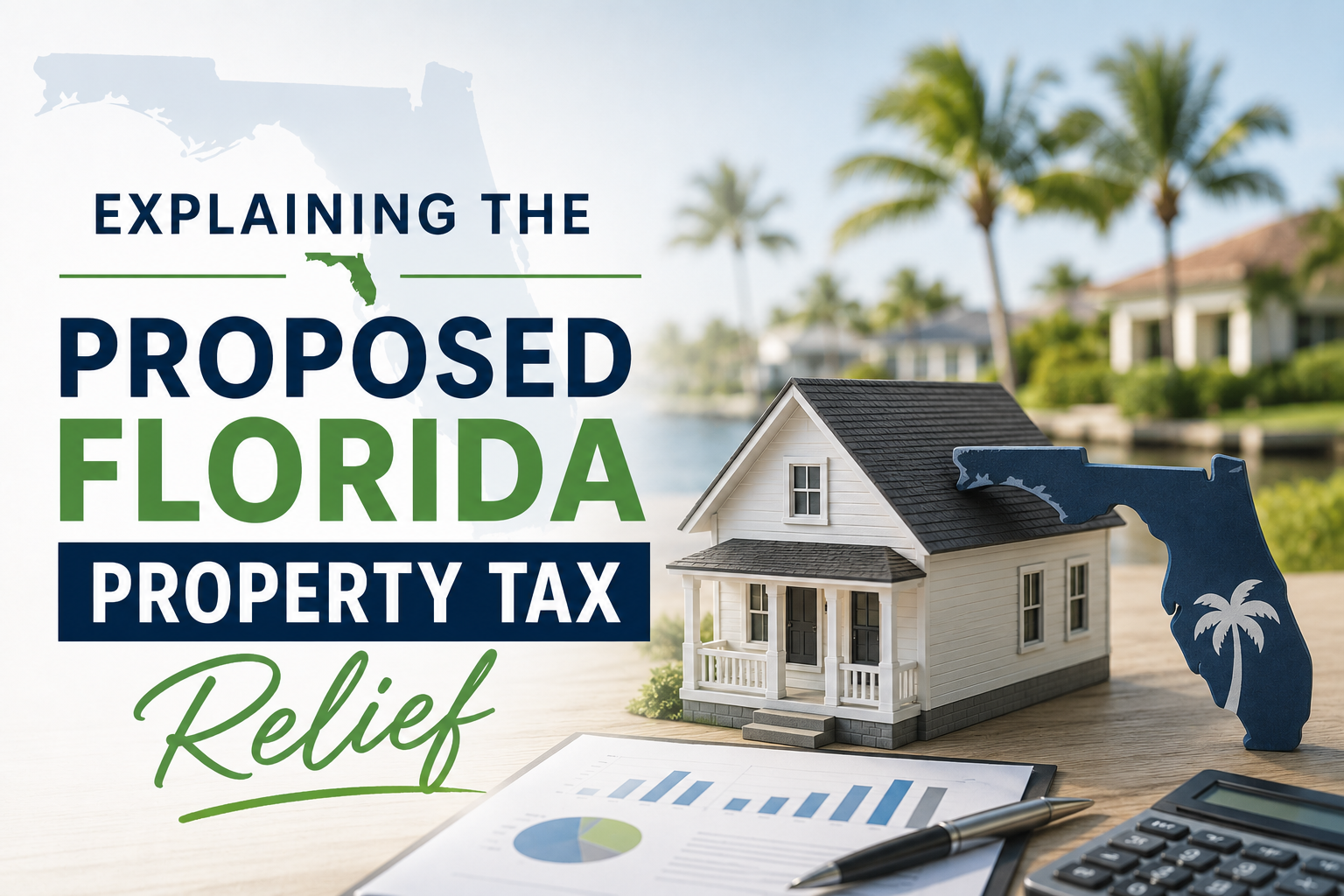
There has been a lot of discussion recently about a proposed change to Florida's property tax system, and I have been getting a lot of questions from my clients asking what it means for them. Because there is so much chatter circulating online (much of it not entirely accurate), I wanted to provide an overview of what is currently being proposed and how it could affect Florida homeowners, future residents, and real estate investors.
First of all, nothing has changed yet. The proposal is not law. Earlier this summer, Florida lawmakers approved a constitutional amendment for property tax reduction that is expected to appear on the November 2026 ballot. Florida voters will ultimately decide whether the amendment passes, and it must receive at least 60% voter approval to become law. Currently, Florida homeowners who qualify for Homestead Exemption can receive up to a $50,000 exemption on the taxable value of their primary residence. If approved by voters, the proposal would significantly increase that exemption. They are proposing a tiered approach to increased exemptions as follows:
- Current Law: Homestead Exemption: Up to $50,000
- Starting January 1, 2027: Homestead Exemption increases to $150,000
- Starting January 1, 2028: Homestead Exemption increases to $250,000
Property taxes would NOT be eliminated. School taxes would continue to be assessed. The increased exemption would apply primarily to the non-school portion of property taxes. For many homeowners, this could substantially reduce their annual property tax bill, and some homeowners could owe little or no non-school property taxes depending on their home's assessed value and local tax rates. The proposal applies only to a homeowner's primary residence that qualifies for Florida Homestead Exemption. With costs for insurance, maintenance, and everyday living expenses, many Florida homeowners could welcome lower property tax bills if the amendment passes.
While sounds wonderful, there are some very important considerations to understand, especially if you are considering a move to Florida.
- If you already live in Florida and/or establish Homestead Exemption before January 1, 2027, you would be eligible for the expanded exemption schedule outlined above. However, if you move to Florida and establish residency after January 1, 2027, the proposal would require you to maintain Florida residency for up to five years before becoming eligible for the enhanced exemption benefits available to existing Florida residents—what this means is that you would be only be eligible for the current $50,000 exemption for their first five years. The proposal appears designed to reward long-term Florida residents while limiting immediate access to the larger exemptions for new arrivals.
- There is great uncertainty at this time as to how this would impact Second Homes and Investment Properties. The proposed benefits are aimed primarily at owner-occupied homestead properties—not vacation homes, second homes, rental properties, or commercial real estate. Many economists and policy experts have raised questions about how local governments would replace the billions of dollars in tax revenue that could be lost if homesteaded properties receive substantially larger exemptions. Local governments still need to fund services such as Police and fire protection, Roads and infrastructure, Parks and recreation, Emergency services and Water management/public works.
- Because of this, some analysts believe a larger share of the tax burden could eventually shift to properties that do not qualify for Homestead Exemption. Those properties may include Second homes, Vacation properties, Seasonal residences, Rental properties, Commercial real estate or Multifamily investment properties. The proposal also includes provisions that could reduce annual assessment increases on certain non-homestead properties, but the long-term impact on tax rates remains uncertain.
So here is my take on this subject:
This proposal could represent one of the most significant changes to Florida property taxation in decades. Current Florida homeowners—and those planning to make Florida their primary residence and establish Homestead Exemption before January 1, 2027—could potentially benefit from substantial property tax savings if the amendment is approved by voters. For those considering a move to Florida and intending to homestead their property, it may be worthwhile to evaluate your timeline carefully, as the proposal includes a potential five-year waiting period for individuals who establish Florida residency after January 1, 2027.
The long-term impact on local government funding, second homes, vacation properties, and investment properties remains uncertain. While some experts believe a greater share of the tax burden could shift to non-homestead properties, there is currently no clear consensus on exactly how these property owners would be affected. As additional details become available and the proposal moves toward the November 2026 vote, I'll continue sharing updates to help you make informed real estate and financial decisions.
If you have questions or would like to discuss your Florida home plans, please don't hesitate to reach out. I’m always here to guide you as best as I can.
Recent Posts